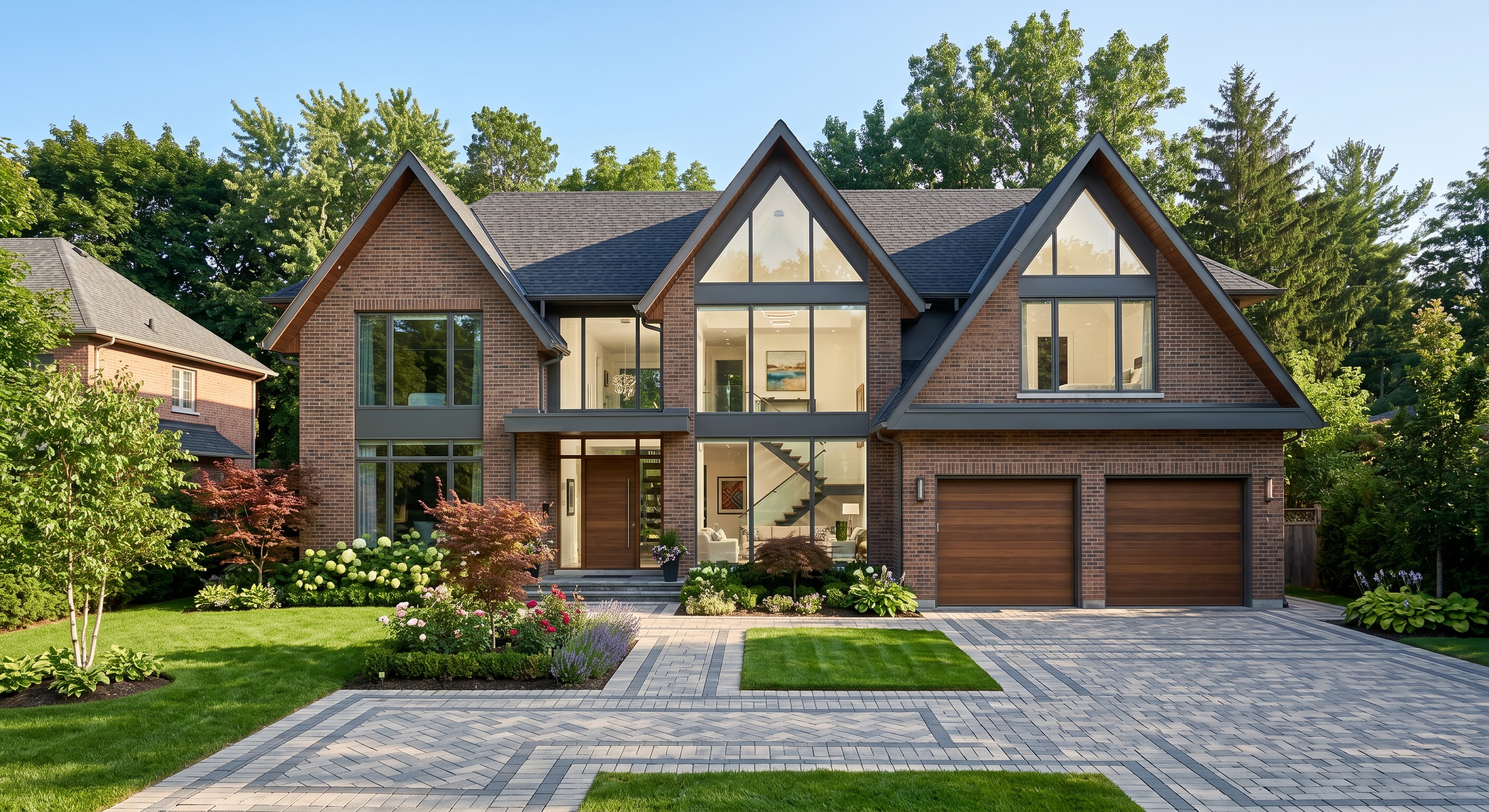
While much of the Greater Toronto Area real estate market has slowed through 2025 and into early 2026, two buyer segments continue making strategic moves: growing families trading up from condos and starter homes, and empty nesters downsizing from houses they no longer need.
Both groups are capitalizing on the same market reality—more inventory, reduced competition, and sellers who are willing to negotiate. For families who have outgrown their current space and retirees ready to simplify, the current environment presents opportunities that weren’t available during the competitive bidding-war years of 2020-2022.
Where Growing Families Are Trading Up
Families moving from condos or starter townhouses into larger homes with yards and access to strong school districts are concentrating their searches in three key areas across the GTHA. Each offers distinct advantages depending on priorities around commute times, community maturity, and budget.
North Oakville (Glen Abbey, Uptown Core, River Oaks)
North Oakville has long attracted families seeking established neighbourhoods with top-ranked schools and mature tree canopies. Areas like Glen Abbey, the Uptown Core, and River Oaks offer access to community centres, libraries, and recreational facilities that have been in place for decades—a significant advantage over newer developments where amenities are still being built out.
Commute times are favourable for downtown Toronto workers: approximately 30 minutes via GO Transit or the QEW, and roughly 20 minutes to Pearson International Airport. The trade-off is price. Detached homes in North Oakville typically range from $1.4 million to $2.5 million depending on neighbourhood and property size. While this represents premium pricing, resale values in these areas have historically remained stable through market cycles.
Milton (Dempsey, Timberlea, Harrison)
For families prioritizing modern construction, newer infrastructure, and maximizing square footage per dollar, Milton has emerged as a compelling option. Neighbourhoods like Dempsey, Timberlea, and Harrison feature master-planned communities built within the last 10-15 years, with open-concept layouts, finished basements, and double-car garages as standard features.
The GO train connection provides 50-minute access to Union Station, making Milton viable for Toronto commuters willing to trade travel time for housing value. School quality is strong, parks are abundant, and the infrastructure is purpose-built for families. Detached homes here typically range from $1.1 million to $1.6 million—often providing 20-30% more living space compared to similarly priced properties in more established GTA markets.
Burlington (Alton Village, Orchard, Palmer)
Burlington strikes a balance between Oakville’s established prestige and Milton’s value proposition. Neighbourhoods like Alton Village, Orchard, and Palmer offer mature landscaping, walkable village cores, and a mix of older character homes alongside newer construction.
GO train access provides direct connections to downtown Toronto, while highly-rated schools and conservation areas contribute to the area’s appeal for families. The lakefront trails system and proximity to the Niagara Escarpment offer recreational access that newer suburban developments can’t replicate. Detached home prices range from $1.3 million to $2.2 million, with variation based on property age, lot size, and specific neighbourhood.
Understanding the Move-Up Financial Picture
For many growing families, the financial mechanics of trading up involve selling a condo or townhouse purchased 5-10 years ago and applying the accumulated equity toward a larger property. Here’s what that transition typically looks like in practice:
A representative scenario:
A family sells their Mississauga townhouse for $850,000. After real estate commissions and legal fees, they net approximately $800,000. With $400,000 remaining on their mortgage, they have $400,000 in available equity.
They purchase a detached home in Milton for $1.3 million, putting down 25% ($325,000) to avoid CMHC insurance premiums. This leaves $75,000 in retained equity—capital that can be allocated toward renovations, furniture, or held as an emergency fund.
Their new mortgage of $975,000 at 4% interest translates to approximately $5,144 per month in carrying costs. Compared to their previous townhouse mortgage of $2,800 per month, this represents a substantial increase. However, the trade includes a yard, two additional bedrooms, a finished basement, and access to the school catchment they’ve prioritized.
The retained equity provides meaningful financial flexibility during the transition period, particularly for families managing concurrent closing dates or planning immediate home improvements.
Where Empty Nesters Are Downsizing
After decades of maintaining large family homes, many retirees and near-retirees are re-evaluating their housing needs. The appeal of urban simplicity—walkability, minimal maintenance, professional building management, and lock-and-leave convenience for travel—is driving downsizing decisions toward specific Toronto neighbourhoods.
Three areas consistently attract empty nesters seeking a combination of culture, walkability, and quality construction:
Yorkville
Yorkville represents the premium end of the downsizing market. Proximity to high-end shopping along Bloor Street, world-class dining, the Royal Ontario Museum, and direct subway access at Bloor-Yonge make this neighbourhood appealing to downsizers who aren’t willing to compromise on location or finishes.
Condominium buildings in Yorkville tend to offer larger floor plans (1,200-2,000+ square feet) designed and built before the shift toward smaller investor-focused units. Prices range from $1.2 million to $3 million and beyond, depending on building, finishes, and views. Resale values in Yorkville have historically remained stable even during broader market corrections.
St. Lawrence Market
The St. Lawrence neighbourhood achieves a perfect 100 Walk Score, reflecting its exceptional walkability and access to services. Buildings here—many constructed 15-20 years ago—feature substantially larger layouts than modern developments. Two-bedroom units of 1,000-1,500 square feet with dedicated dining rooms and walk-in closets remain common, a stark contrast to contemporary new-build projects.
The neighbourhood wraps around St. Lawrence Market, consistently ranked among the world’s best food markets, and provides immediate access to the waterfront trail system. Pricing typically ranges from $800,000 to $1.8 million depending on building age, unit size, and views.
Summerhill
Summerhill appeals to downsizers seeking an urban lifestyle without high-rise towers. The neighbourhood features tree-lined residential streets, modern townhouses, and low-rise luxury condominiums designed specifically for buyers transitioning from single-family homes.
Located 10 minutes from downtown via the Yonge subway line, Summerhill maintains a neighbourhood feel while offering urban convenience. Summerhill Market, York Racquets Club, and several parks contribute to a walkable, amenity-rich environment. Condos and townhomes typically range from $900,000 to $2 million and beyond.
Understanding the Downsizing Financial Picture
For many empty nesters, downsizing creates an opportunity to eliminate mortgage debt, reduce ongoing maintenance costs, and free up capital for retirement, travel, or wealth transfer to adult children.
A representative scenario:
A couple sells their Burlington family home for $1.8 million, netting approximately $1.7 million after transaction costs. They purchase a two-bedroom condominium in the St. Lawrence neighbourhood for $1.2 million (including land transfer tax and legal fees), leaving them with $500,000 in freed equity.
Their new living situation eliminates mortgage payments entirely. Monthly condominium fees typically range from $0.50-$0.75 per square foot depending on building age, amenities, and unit size—approximately $600-$900 per month for a 1,200 square foot unit. Annual property taxes drop from approximately $8,000 to $4,500. Ongoing costs for lawn care, snow removal, furnace maintenance, roof repairs, and other single-family home expenses are eliminated.
The lifestyle shift is equally significant: groceries, restaurants, medical appointments, and cultural attractions become accessible within a 10-minute walk, often reducing or eliminating the need for a second vehicle.
Current Market Conditions Favour Both Segments
Inventory levels across the GTHA remain elevated compared to the 2020-2022 period. Bidding wars have largely disappeared, particularly in the move-up detached home category and the luxury condominium segment. Well-positioned buyers are consistently securing properties 3-5% below initial list prices.
For growing families, this represents a window to enter family-appropriate neighbourhoods before any potential spring market tightening. For empty nesters, several developers are launching condominium projects specifically designed for the downsizing demographic—larger floor plans, higher-end finishes, and building amenities tailored to mature buyers. This has created more choice in the downsizing segment than has existed in recent years.
Both market segments share a common advantage: the current environment rewards patience, thorough market research, and working with experienced representation who understands neighbourhood-specific dynamics and transaction structuring.
Sources & References
- RE/MAX, “Mississauga Housing Market Outlook (2026)” (January 2026)
- Goldfarb Realty, “Downsizing to Yorkville, Toronto”
- The Erica Reddy Team, “Toronto Neighbourhoods for Downsizing” (March 2024)
- Torontoism, “5 Toronto Neighbourhoods Perfect for Empty Nesters” (March 2022)
Christian Deane is a Licensed Sales Representative with Right At Home Realty, Brokerage, specializing in strategic buyer and seller representation across the Greater Toronto Area. For market insights, neighbourhood analysis, or transaction consultation, contact christian@christiandeane.realtor or visit christiandeane.realtor.
Leave a Reply