A rule change from December 2024 is still flying under the radar for many would-be buyers: first-time buyers in Canada can now spread an insured mortgage over 30 years instead of 25.
It’s a small-sounding adjustment with a surprisingly large effect on monthly cash flow. It also comes with a real trade-off. Here’s how to look at both sides.
What Changed, and Who Qualifies
Effective December 15, 2024, the federal government extended 30-year amortizations on insured mortgages (those with less than 20% down) to all first-time buyers and to buyers of new builds. At the same time, it raised the price cap for insured mortgages from $1 million to $1.5 million.
“First-time buyer” is defined more broadly than many people expect. It includes anyone who has never owned a home, anyone who hasn’t lived in a home they owned during the past four years, and anyone whose circumstances changed through a marriage or partnership breakdown. A “new build” means a home that hasn’t previously been occupied for residential purposes.
The minimum down payment is 5% of the first $500,000 of the price, plus 10% of the portion above $500,000. On a $620,000 purchase, that’s $37,000.
The Same Condo, Run Both Ways
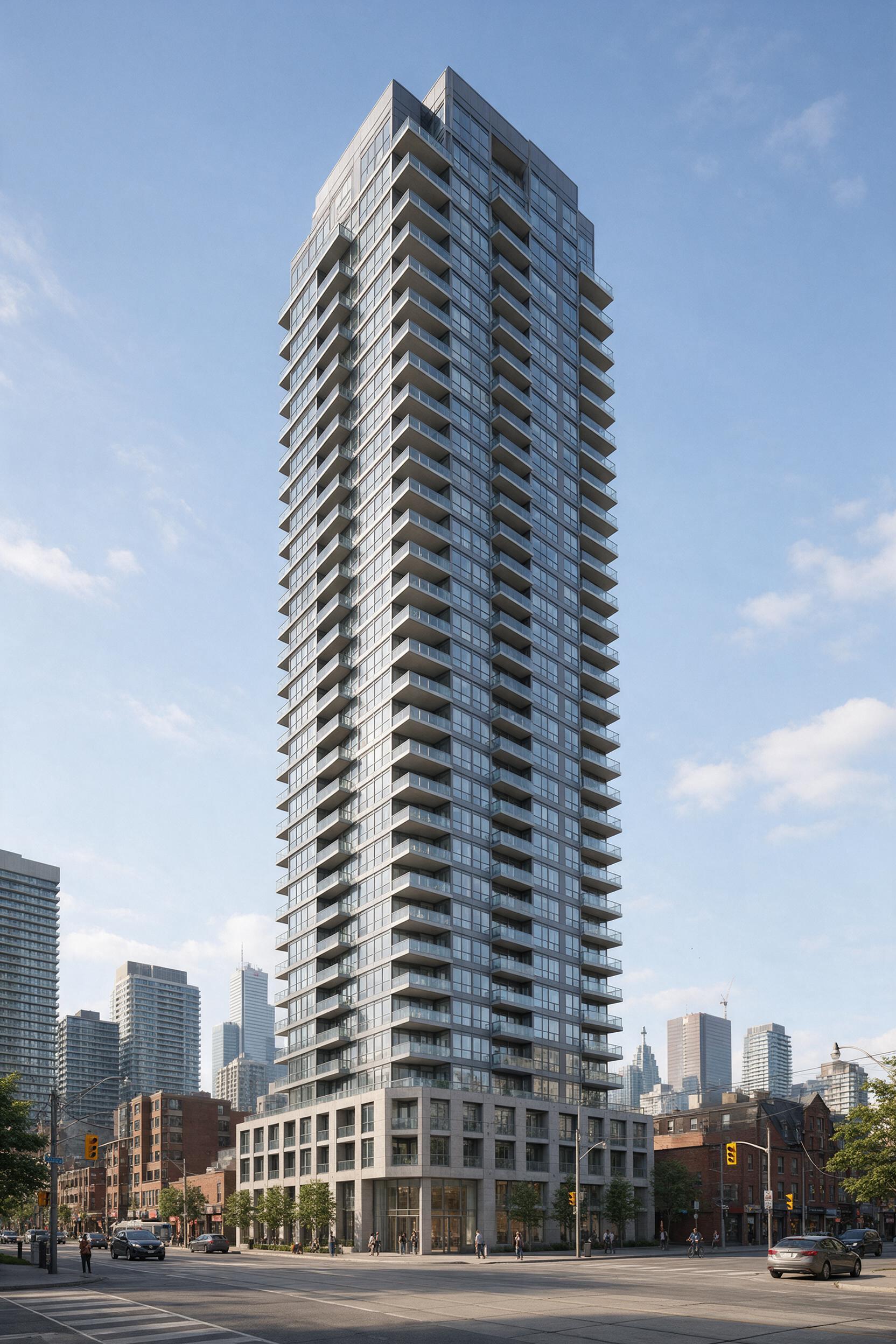
To see what the longer amortization actually changes, take a $620,000 condo, close to the average Toronto condo price in August. Assume the $37,000 minimum down payment, CMHC mortgage insurance rolled into the mortgage, and a 4.5% rate, which sits near the range of 5-year fixed rates available in early October.
| 25-Year | 30-Year | |
|---|---|---|
| Monthly payment | $3,356 | $3,063 |
| Paid toward the mortgage in the first 5 years | $73,993 | $54,064 |
| Total interest over the full term | $400,425 | $495,208 |
These figures assume the 4.5% rate holds for the whole amortization, which it won’t. They’re meant to show the relationship between the two options, not predict a payment. Insurance premiums are calculated at 4.00% for the 25-year option and 4.20% for the 30-year option, since a 0.20% surcharge applies to amortizations beyond 25 years.
What the Longer Amortization Does Well
It lowers the required payment. In this example, the monthly difference is $293, or $3,516 a year. That money can go toward condo fees, property tax, or an emergency fund, which matters most in the first years of ownership when budgets are tightest.
It narrows the gap with renting. Toronto’s average asking rent was $2,571 in August. Owning the condo above would cost $785 more per month than renting that average on a 25-year amortization, and $492 more on a 30-year, before property tax and condo fees. Ownership is still the more expensive monthly option in this scenario. The 30-year simply makes the gap smaller, and the principal paid down along the way is equity that rent never builds.
It keeps your options open. The 30-year payment is the required minimum, not a ceiling. Many lenders allow additional payments (the exact privileges depend on your contract), so a buyer can pay at a 25-year pace when the budget allows and fall back to the lower payment when it doesn’t. A 25-year mortgage doesn’t offer that cushion.
The Trade-Off: More Interest Over Time
Stretching repayment costs more over the full term. In this example, the 30-year option adds roughly $95,000 in interest compared with the 25-year option, plus a slightly higher insurance premium.
That cost is only locked in if the minimum payment is all you ever make. Paying the 25-year amount on a 30-year mortgage brings the total interest to about $403,000, within a few thousand dollars of the 25-year option, while keeping the lower payment available as a fallback. For many buyers, the 30-year works best as a safety net rather than a destination.
Costs the Monthly Payment Doesn’t Include
A mortgage payment is only part of the cost of owning. Before comparing it with rent, add:
- Property tax
- Condo fees (for a condominium)
- Utilities and home insurance
- Closing costs, including land transfer tax and legal fees
- The 8% Ontario PST on the CMHC insurance premium, which is paid in cash at closing and can’t be added to the mortgage (roughly $2,000 in this example)
A lower payment can make a budget workable. It doesn’t change any of these items, so they belong in the comparison from the start.
What the Market Adds to the Picture
GTA new listings were down 14.1% in August compared with a year earlier, while sales declined only slightly. At the same time, the average Toronto condo price was down 3.6% year over year, and bond yields were pushing 5-year fixed rates higher. Supply tightening while prices are still below last year’s levels is part of why buyers are weighing timing carefully right now.
None of that makes a decision for you. It does mean the monthly payment, the rate, and the price are moving independently, so it’s worth testing the numbers against more than one scenario.
Bringing It Together
The 30-year amortization isn’t a better mortgage than the 25-year, or a worse one. It’s a different trade: more breathing room each month in exchange for a higher cost if you only ever pay the minimum.
The useful way to approach it is to ask your lender or broker for written numbers on both options, using your actual price, down payment, and rate. Compare the payments against your real monthly budget, including the costs above, and decide how much flexibility you’d want in your first few years. Whether you qualify, and for how much, is the lender’s decision, and mortgage advice has to come from a licensed mortgage professional. Christian doesn’t provide it, but the real estate side of the analysis, including realistic purchase prices, carrying costs, and timing, is easier to get right when it’s done alongside those numbers.
Key Takeaways
- 30-year amortizations are available on insured mortgages for all first-time buyers and buyers of new builds, effective December 15, 2024
- The insured mortgage price cap is now $1.5 million, up from $1 million
- On a $620,000 condo at 4.5%, the 30-year payment is about $293 lower per month than the 25-year ($3,063 versus $3,356)
- Owning is still more expensive than renting the average Toronto unit in this scenario, but the gap narrows from about $785 to $492 per month before property tax and condo fees
- The trade-off is about $95,000 more interest over the full term, plus a 0.20% insurance surcharge, if only the minimum payment is made
- The required payment is a floor, not a ceiling, so paying more when you can reduces the extra interest cost
- Compare both options in writing with your actual numbers, including closing costs and the 8% Ontario PST on the insurance premium
Sources & References:
- Department of Finance Canada, “The Boldest Mortgage Reforms in Decades” (canada.ca, effective December 15, 2024). 30-year amortizations for insured mortgages for all first-time buyers and buyers of new builds; insured price cap raised from $1M to $1.5M. Minimum down payment: 5% of the first $500,000 plus 10% of the portion above $500,000.
- Toronto Condo Market Report, September 2026 (idealtorontocondos.com, August 2026 data). Average Toronto condo price $617,593 (-3.6% YoY); GTA new listings -14.1% YoY.
- Ratehub.ca, “Best 5-Year Fixed Mortgage Rates” (ratehub.ca, October 2, 2026). Best 5-year fixed rate 4.34%; other lenders 4.59%–4.74%. Bond yields rising.
- CalcNorth, “CMHC Mortgage Rules Canada 2026” (calcnorth.com). CMHC premium 4.00% for loan-to-value of 90.01%–95%; 0.20% surcharge for amortization over 25 years. Ontario charges 8% PST on the premium, payable in cash at closing.
- CP24, “Rent prices across Canada fall for 23rd consecutive month” (cp24.com, September 9, 2026; Rentals.ca data). Toronto average asking rent $2,571 in August.
Christian Deane is a Licensed Sales Representative with Right At Home Realty, Brokerage, specializing in strategic buyer and seller representation across the Greater Toronto Area. For market insights, listing consultation, or transaction guidance, contact christian@christiandeane.realtor or visit christiandeane.realtor.
Leave a Reply