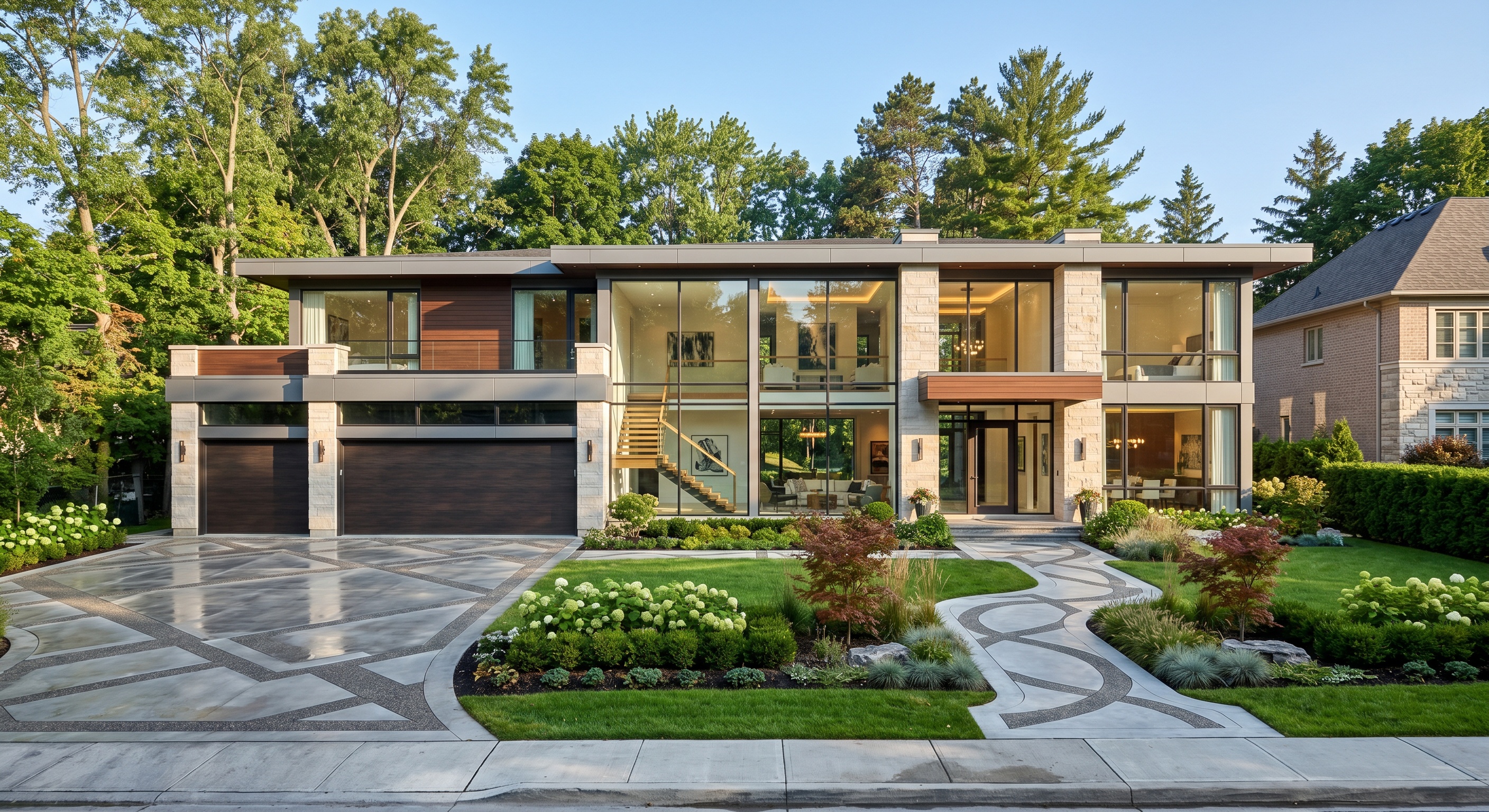
Spring arrives and so does the list.
Book the HVAC service call. Clean the eavestroughs. Check the roof after the freeze-thaw cycle. Deal with the driveway. Sort the backyard. Maybe replace that aging fence. Consider whether the deck needs refinishing this year or can wait one more season.
Every homeowner knows this rhythm. It’s part of ownership. And smart homeowners plan for it.
But here’s the question most people don’t ask themselves: Are you investing that time and money into a home that still fits your life?
The 1% Rule Explained
Two popular guidelines exist for maintenance budgeting:
The 1% Rule: Budget at least 1% of your home’s original purchase price annually for maintenance and upkeep.
If you purchased your house for $900,000, you would budget $9,000 per year for maintenance.
The Square Footage Method: Set aside $1 to $2 per square foot per year.
A 1,500 sqft home works out to $1,500-$3,000 annually using this model.
Both are starting points. Canadian winters can be brutal, adding wear that pushes real costs higher. Older homes need more maintenance than newer builds. Detached homes require more than condos. Your actual costs will vary.
But here’s what matters: You’re likely already working with these numbers. The better question is whether you’re investing that time and money in a home that still serves your needs.
The Real Cost of Home Maintenance in Ontario
Let’s break down what $9,000 per year ($750/month) typically covers for a $900K GTHA home:
Annual Predictable Costs:
- HVAC servicing: $200-400
- Eavestrough cleaning: $150-300
- Lawn care/snow removal: $1,200-2,400
- Property insurance: $1,500-2,500
- Property tax: $4,500-6,500 (separate from 1% rule, but part of ownership)
Recurring But Variable:
- Interior paint touch-ups: $500-1,500 every 2-3 years
- Exterior paint/siding: $5,000-15,000 every 7-10 years
- Roof replacement: $8,000-20,000 every 20-25 years
- Furnace replacement: $4,000-8,000 every 15-20 years
- Water heater: $1,200-2,500 every 10-12 years
- Windows: $8,000-20,000 every 20-30 years
- Driveway resurfacing: $3,000-8,000 every 10-15 years
Add unexpected repairs (plumbing, electrical, appliance failures), and the 1% rule often proves conservative for older homes.
The Question Nobody Asks
Here’s where it gets interesting.
If you bought a townhouse for $750K a few years ago, the 1% rule puts your annual maintenance reserve at roughly $7,500. That’s manageable. You’ve probably already built it into your budget.
But if your family has grown, the kids have outgrown the bedrooms, the yard is nonexistent, and your home office is your kitchen table—that $7,500 is going into a home that no longer fits your life.
The same investment, applied to the right home, delivers more value.
Move-Up Buyers: When Does the Math Make Sense?
The current GTHA market makes the move-up equation work in your favour:
- More inventory than we’ve seen in years
- Less competition from other buyers
- Motivated sellers willing to negotiate
- The gap between what you sell for and what you buy is narrower than it’s been
Let’s look at real numbers:
Move-Up Scenario: Townhouse to Detached
Current Situation:
- Purchased Toronto townhouse 2020: $750K
- Current value: $980K
- Mortgage remaining: $465K
- Annual maintenance: $7,500/year (1% rule)
The Problem:
- Family has grown (2 kids now 3)
- Bedrooms are tight
- No yard for kids/pets
- Home office is dining room table
- Maintenance investment into wrong-sized home
The Move:
- Sell townhouse: $980K
- Net after 4% fees: $930K
- Pay off mortgage: $465K
- Equity available: $465K
Buy Mississauga detached:
- Purchase price: $1.24M
- Down payment (20%): $248K
- Remaining equity: $217K
That $217K cushion covers:
- First-year moving/setup costs
- Furniture for larger space
- Landscaping/fence if needed
- Maintenance reserve for new home
- Emergency fund
The Result:
- New home matches current family size
- Proper yard for kids
- Dedicated home office space
- School catchment of your choosing
- Maintenance investment into home that works
Your annual maintenance budget is now $12,400 (1% of $1.24M). Yes, that’s more than $7,500. But you’re maintaining the right home for your life now.
Empty Nesters: What Does Right-Sizing Actually Look Like?
If you’re maintaining a large detached home with rooms nobody uses, spring maintenance season probably feels like a burden rather than a project.
The work doesn’t get easier as you age. The stairs don’t get shorter. The yard doesn’t get smaller. The list doesn’t get shorter.
Right-sizing isn’t about “downsizing” in every dimension. It’s about going smarter. The right next home matches the life you’re actually living now.
Right-Sizing Options in the GTHA
Townhouses:
Among the most popular moves for empty nesters. Low-maintenance ownership, minimal lawn management, often more square footage than you’d expect at a comparable price point.
Many townhouse communities in the GTHA include exterior upkeep in the maintenance fee—taking seasonal work entirely off your plate.
You still get:
- Private entrance
- No shared walls above or below
- Own your land
- Garage or parking
- Private patio
Typical scenario:
- Sell: $1.4M detached home
- Buy: $850K townhouse
- Free up: $500K+ in equity (after paying off mortgage)
That equity can fund retirement, travel, helping kids/grandkids, or simply provide security.
Annual maintenance drops from $14,000 to $8,500, and most of the heavy lifting is handled by the condo corporation.
Semi-Detached Homes:
A strong middle ground. Private entrance, small manageable yard for a garden or patio, ownership of your own land—without the maintenance burden of a large detached property.
Semi-detached homes in established GTHA neighbourhoods hold value extremely well. Many buyers in this segment are mortgage-free or close to it after applying proceeds from their previous home.
Typical scenario:
- Sell: $1.3M detached
- Buy: $950K semi-detached
- Free up: $300K+ equity
Smaller yard means less work. One shared wall means marginally lower heating costs. Established neighbourhoods mean mature trees, walkable amenities, known school systems.
Bungalows:
Single-floor living is increasingly in demand, and well-maintained bungalows in the GTHA hold their value accordingly.
No stairs. No rooms you’ll never use. Many buyers in this segment renovate a bungalow exactly to their taste and stay for twenty years.
If you want a garden, a workshop, a guest room with privacy—a bungalow delivers it without the square footage you no longer need on upper floors.
Typical scenario:
- Sell: $1.5M two-story detached
- Buy: $1.1M bungalow
- Free up: $350K+ equity
Maintenance budget drops because you’re maintaining less square footage. No stairs means aging in place is viable. Everything you use daily is on one level.
Condos:
The right fit for buyers who want zero exterior maintenance responsibility with a lock-and-leave lifestyle.
Average condo maintenance fees in the GTA run approximately $0.59 per square foot per month—roughly $590-700 per month for a 1,000-1,200 sqft unit.
That fee covers:
- Building maintenance
- Common area utilities
- Building insurance
- Reserve fund contributions
- Often includes water, heat, sometimes hydro
Typical scenario:
- Sell: $1.4M detached home
- Buy: $750K condo
- Free up: $600K+ equity
Yes, you pay monthly condo fees. But you’re not paying for:
- Roof replacement
- Exterior paint
- Driveway maintenance
- Snow removal
- Lawn care
- Window/siding repair
For many empty nesters, that trade-off makes sense. Especially if travel, visiting family, or winter escapes are part of your plans.
The Market Timing Question
“But should I wait for the market to improve before selling?”
Here’s the reality: the GTHA benchmark home price sits at $938,800 as of February 2026—down 7.9% year-over-year.
Yes, prices are down from the peak. But here’s what matters for move-up buyers and right-sizers:
Both sides of the transaction are down.
If your home is worth 7-8% less than peak, so is your target purchase. The gap between selling and buying is relatively stable. In fact, it’s narrower now than during peak market conditions when bidding wars inflated purchase prices.
You’re trading today’s market dollars for today’s market dollars. And you have negotiation leverage on the buy side that you won’t have when the market rebounds.
The Hidden Cost of Waiting
Every year you wait to make a move that improves your quality of life is a year you don’t get back.
If you’re maintaining a house that no longer fits, you’re investing:
- Money into maintenance you wouldn’t need in a right-sized home
- Time on tasks you wouldn’t face in a right-sized home
- Energy managing space you don’t use
Meanwhile:
- Your kids are getting older (for move-up buyers)
- You’re getting older (for right-sizers)
- The market conditions that favour this type of move won’t last forever
Running Your Own Numbers
Here’s how to evaluate whether your current home maintenance investment still makes sense:
Step 1: Calculate Your True Maintenance Cost
Add up actual spending over the last 2-3 years:
- Regular maintenance (lawn, HVAC, cleaning, etc.)
- Major repairs (roof, furnace, water heater, appliances)
- Capital improvements (deck, fence, driveway, windows)
- Property tax and insurance
Divide by number of years for average annual cost.
Step 2: Compare to 1% Rule
Is your actual spending:
- Below 1%? You’re probably deferring needed maintenance
- At 1-1.5%? About right for a well-maintained home
- Above 1.5%? Either older home needing significant work, or bad luck with failures
Step 3: Project Next 5 Years
What major expenses are coming?
- Roof age? Furnace age?
- Windows original to house?
- Deck/fence deteriorating?
- Driveway cracking?
- Exterior paint needed?
Add up expected big-ticket items over next 5 years.
Step 4: Evaluate Fit
Does your home still match your life?
Move-up buyers ask:
- Do we have enough bedrooms?
- Is there a dedicated workspace?
- Is outdoor space adequate?
- Are we in the right school district?
- Does the layout work for our family?
Right-sizers ask:
- Are we maintaining rooms we don’t use?
- Is the yard too much work?
- Are the stairs becoming a problem?
- Do we want easier, lower-maintenance living?
- Would we rather free up equity than maintain this much house?
Step 5: Run the Trade-Up Numbers
Get your home valued. Figure out net proceeds after mortgage payoff. Research what your target home type/area costs. Calculate down payment needed and equity remaining.
Often, the numbers are better than people expect.
What to Do Next
If the 1% rule reveals you’re investing significant time and money into a home that no longer serves your needs, here’s the sequence:
For Move-Up Buyers:
- Get current market valuation of your home
- Calculate equity position (what you’d net after selling)
- Define what “fits” means for your family now
- Tour properties to see what your budget delivers
- Run the financing numbers with mortgage broker
- Make the move when it makes sense
For Right-Sizers:
- Honestly assess whether current home serves your needs
- Research options (townhouse, semi, bungalow, condo)
- Visit communities and properties that interest you
- Calculate equity you’d free up
- Consider lifestyle benefits (less work, more flexibility)
- Make decision based on quality of life, not market timing
Final Thought
The 1% rule is a useful planning tool. But it’s just a tool.
What matters more is whether you’re investing that 1% into a home that still serves your life.
If your townhouse is too small, maintaining it perfectly won’t add bedrooms.
If your detached home has become too much work, maintaining it beautifully won’t reduce the burden.
If you’re ready to trade up, right-size, or simply move into a home that better fits your current chapter—the market conditions right now favour making that move.
The maintenance budget will come with you. The question is whether you’re applying it to the right home.
Sources & References:
- UrbanTasker, “How Much Should I Budget for Home Maintenance and Repairs in Canada?” – The 1% rule and square footage method explained
- WOWA.ca, “Condo Maintenance Fees in Canada” (December 2025) – Average Toronto condo fee: $0.59/sqft/month
- Thapar Team, “What Are Condo Fees Really Paying For?” – Typical fee coverage breakdown
- TRREB Market Watch, February 2026 – GTA benchmark price: $938,800 (–7.9% YoY)
Christian Deane is a Licensed Sales Representative with Right At Home Realty, Brokerage, specializing in strategic buyer and seller representation across the Greater Toronto Area. For market insights, listing consultation, or transaction guidance, contact christian@christiandeane.realtor or visit christiandeane.realtor.
Leave a Reply